
With hybrid working you often need fewer workstations than you have employees. Base it on the number of people on your busiest day, not on the total. Include space for meetings and choose an office that can grow or shrink with you.
Now that many teams work from home part of the week, half the desks at the office are often empty. On Tuesday, by contrast, it is too full. Anyone looking for a new office then wonders: how much space do we actually still need? This article helps you answer that question.
What is hybrid working?
Hybrid working means you work at the office part of the week and somewhere else the rest of the time, usually at home. What that split looks like differs per company. Some teams agree on fixed office days, others leave it to the employee.
That has consequences for your office. Not everyone is there at the same time, but on the days the team comes together you do want enough space. And those days are often about meeting, not quiet work.
How many workstations do you need with hybrid working?
Do not start with the number of employees, but with the number of people at the office at the same time on a busy day. This is how to go about it:
- Look back over a few weeks. How many people were at the office each day? Which days were the busiest?
- Take the busiest day as the basis. On that day, everyone needs a workstation.
- Add a small margin. For a new colleague, a guest or a week with extra work.
- See what you can share. A flex desk or a shared space in the building can absorb peaks.
If you agree on fixed office days, your busiest day is probably that fixed day. If you leave it open, it spreads out more and you often need fewer workstations.
Looking for an office that moves with you?
See offices and request a tailored proposal
Include meetings in your sums
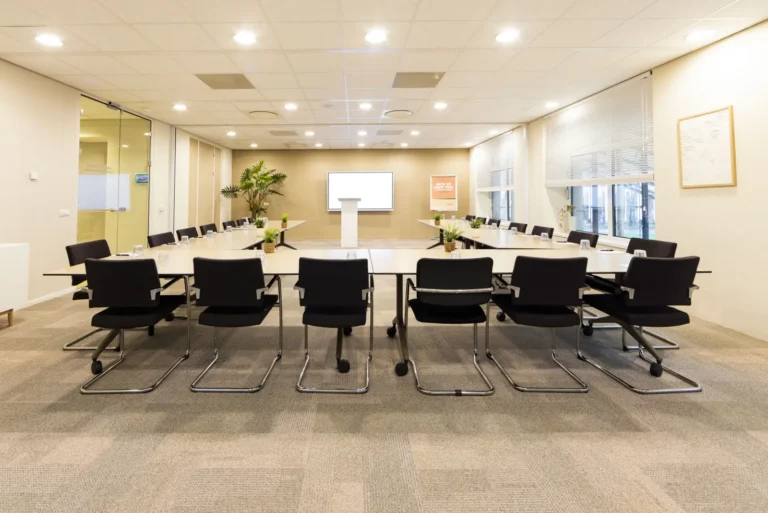
On office days there is a lot of meeting. That calls for space where you can sit together at a table, and for places to call colleagues who are at home. An office with only desks soon falls short with hybrid working.
You do not have to rent all that space yourself. In a business centre, you book a meeting room when you need one. That saves metres of your own, and you only pay for the times you use it. What to look out for when booking is covered in “Choosing a meeting room: what to look out for?”
How many square metres?
Once you know how many workstations you need, you can look at the metres. Check which measure a provider uses: VVO, net metres or something else. “VVO, BVO and NEN 2580: square metres explained” sets out the difference and how to compare offices fairly.
It is often more useful to look at the number of workstations an office has than at the metres alone. Two offices with the same VVO can fit a different number of desks because of the shape of the room.
How do you stay flexible as your team grows?
With hybrid working, needs change faster than they used to. A team grows, a project ends, the arrangements about working from home change. A five-year lease is a poor fit for that.
So pay attention to these points:
- Term. How long are you tied in? A shorter term gives you room to adjust.
- Expanding. Can you rent the office next door as well when the team grows? Offices on the same floor with consecutive numbers are often next to each other and can sometimes be combined.
- Going smaller. Can you move to a smaller office in the same building if you need less space?
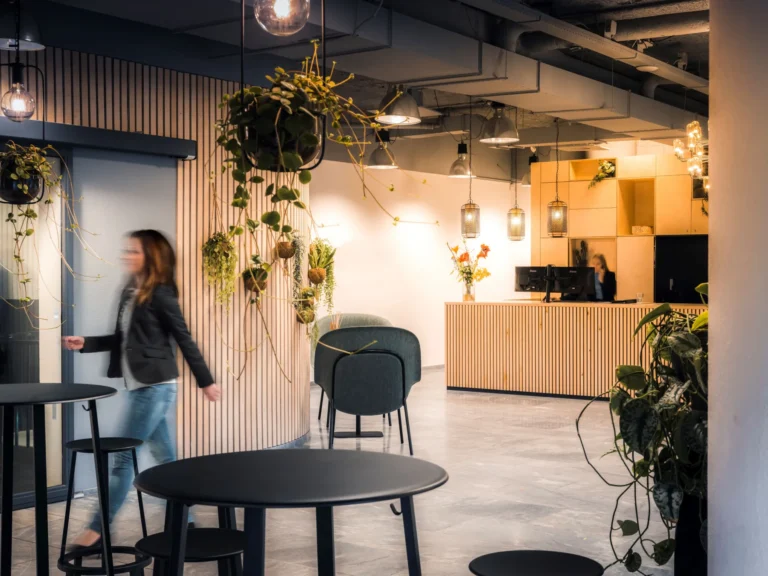
- Shared spaces. Can staff move to a flex desk or lounge in the building on busy days?
Whether you can manage with less office, or even without one, is covered in “Working from home or a workspace away from home?”
Hybrid working at Element Offices
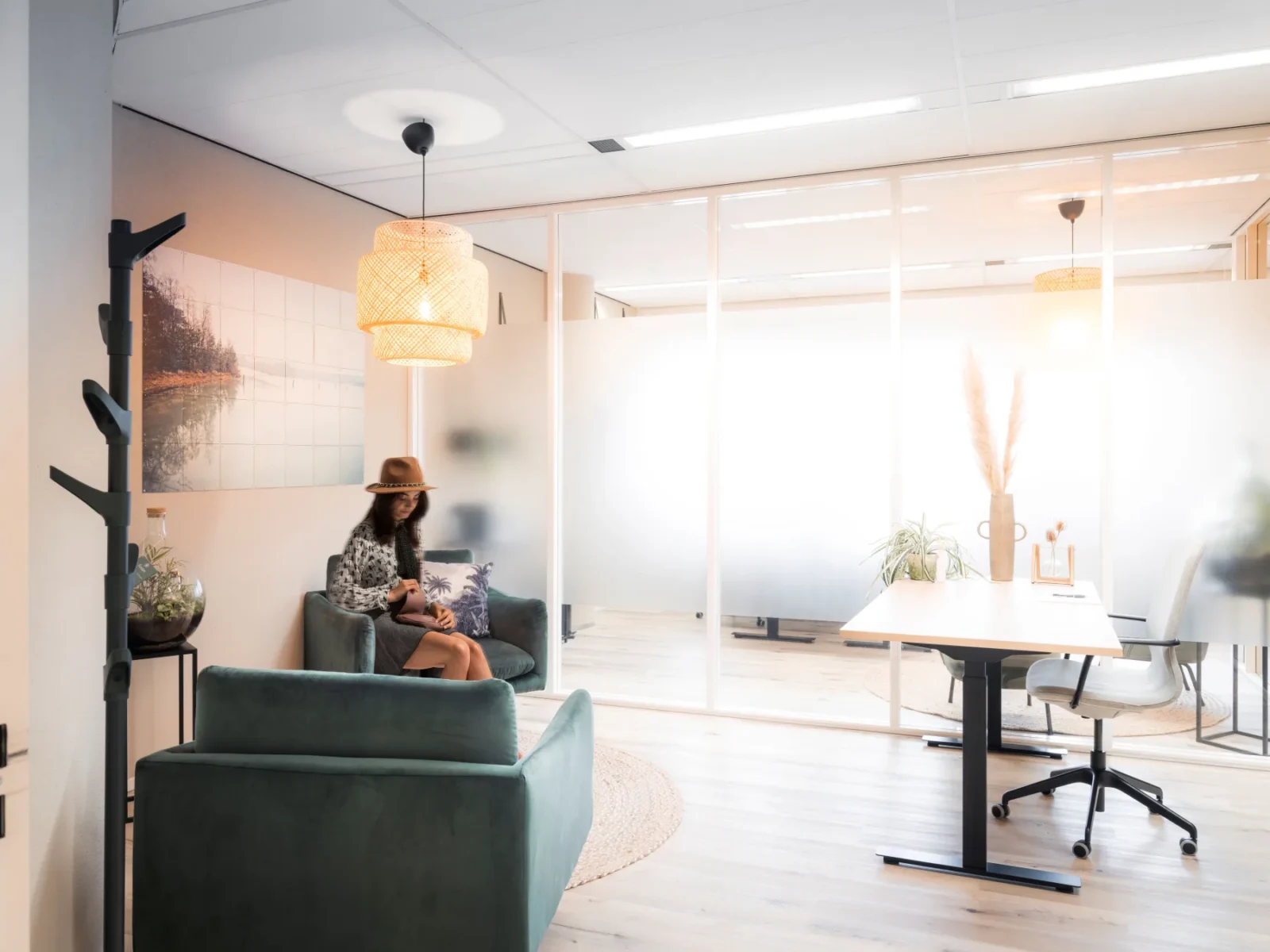
At Element Offices you rent an office that matches the number of workstations you need now, from a single workstation to a whole floor. The term differs per contract: you can rent from one month, and offices are usually rented for a year or less. If your team grows, we look at whether an office next to yours is free to combine. Our sales colleague then makes a proposal. In the building you share the communal spaces and meeting rooms with other tenants, and as an office tenant you can always get in.
Want to know what fits? Request a tailored proposal via Office space, or book a viewing.
Frequently asked questions
How many workstations do you need with hybrid working?
Base it on the number of people at the office at the same time on your busiest day, not on the total number of employees. Add a small margin and see what you can absorb with shared spaces.
How do you stay flexible as your team grows?
Choose a shorter term and a provider where you can expand or go smaller in the same building. Ask whether offices can be combined and whether you can book a flex desk or meeting room on busy days.
Do you still need an office with hybrid working?
For most teams, yes. Office days are about working together and meeting, and that is easier in one place. You do often need fewer workstations than before.