
When renting office space, you look at more than the square metres. Look at the location, the contract term, what the monthly price includes and which spaces you share. And always go and take a look before you sign.
Finding a new office looks simple: you work out how many people need to sit there, look for something nearby and sign. In practice, the difference is in the details. A contract you cannot terminate if your team shrinks. A monthly price that leaves out half of what you need. A building where your clients cannot park. With these eight points, you compare offices on what really matters.
1. The location: who does it need to be easy for?
Start with the people who will come there. How does your team travel, and where do they live? If you often receive clients, their travel time counts too. Look at public transport, the distance to the motorway and whether there is parking, for yourself and for visitors. An office that looks good on paper but means an extra hour of travel for half your team is something you will notice.
2. How much space do you really need?
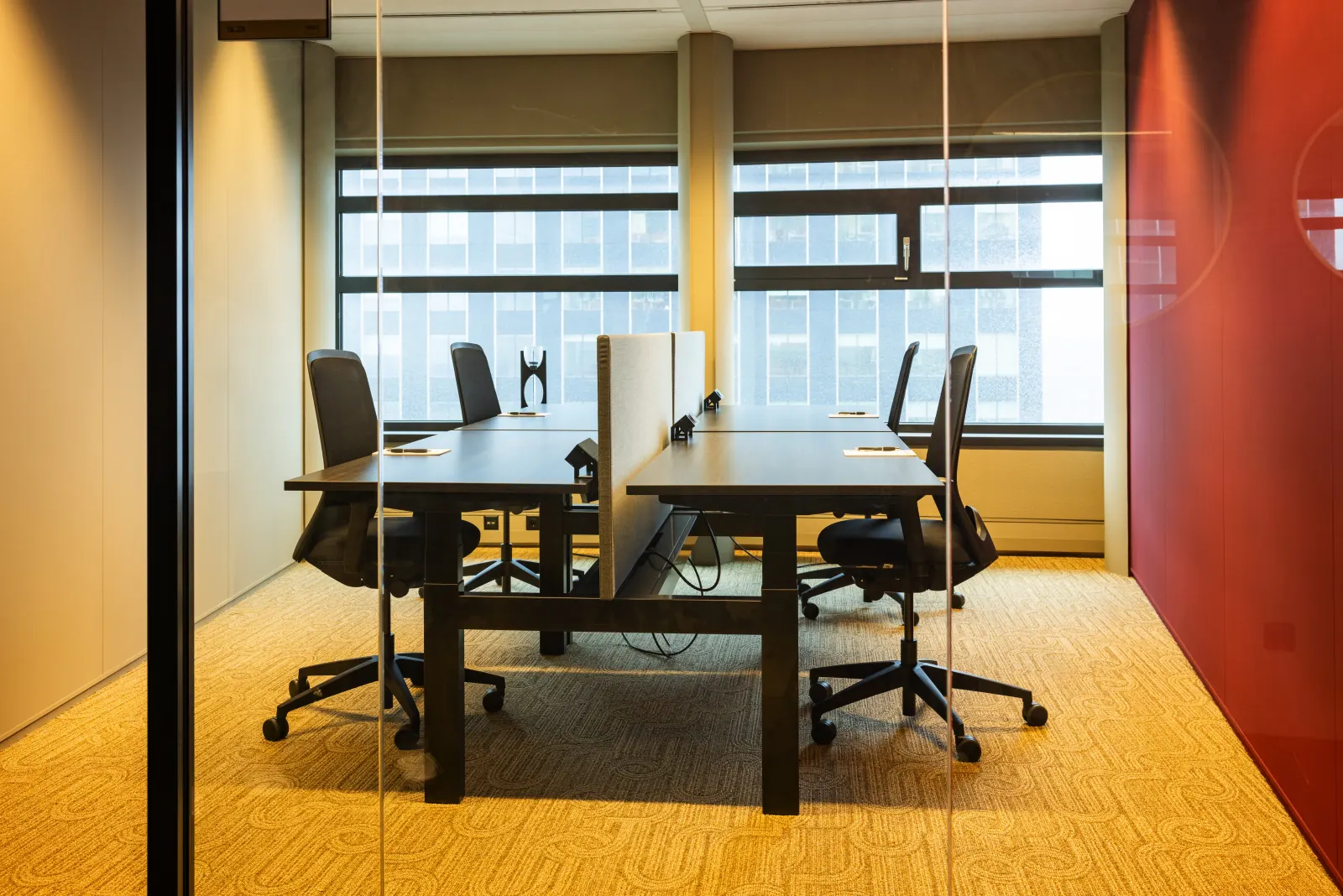
Do not just count workstations; look at how you work. Are people at the office every day, or partly at home? How much meeting is there, and do you need your own room for it or can you book a meeting room? When comparing, also check how the metres are counted. The difference between net and lettable floor area is explained in “VVO, BVO and NEN 2580: square metres explained”. If your team works hybrid, “Hybrid working: how much office do you still need?” will help.
3. Term and notice period
How long are you tied in, and what happens if you want to leave earlier? With a traditional lease for office space, you often sign for several years. In a business centre it can be shorter. Read the notice period, and check whether you can expand or downsize during the term. More on contracts and terminating them in “Commercial lease: term and termination”.
4. What does the monthly price include?
This is where offices differ most. With one, you rent bare metres and pay for energy, cleaning, internet and service charges separately. With another, much of that is already in one amount. Ask for a list for each office of what is included and what is not. Think of:
- energy and service charges;
- cleaning of your own office and of the shared spaces;
- internet;
- use of meeting rooms, and whether you pay for them each time;
- furniture, if you are not bringing your own.
That way you compare the cost of an office fairly, and you do not get any surprises afterwards.
5. Shared spaces
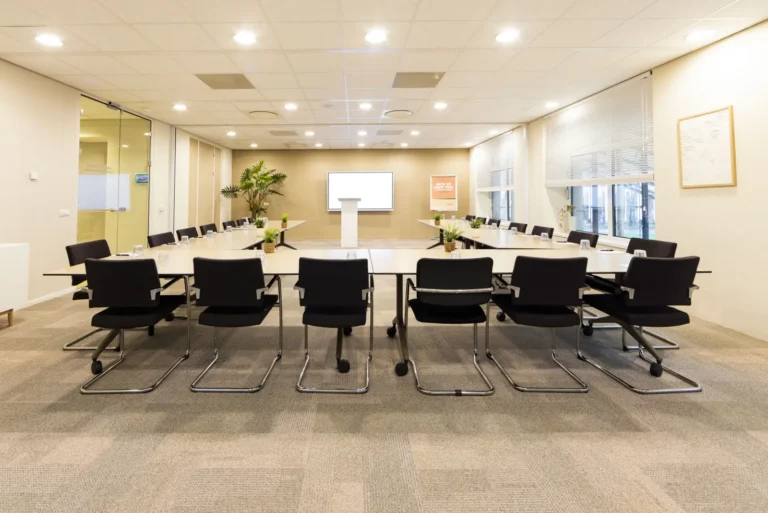
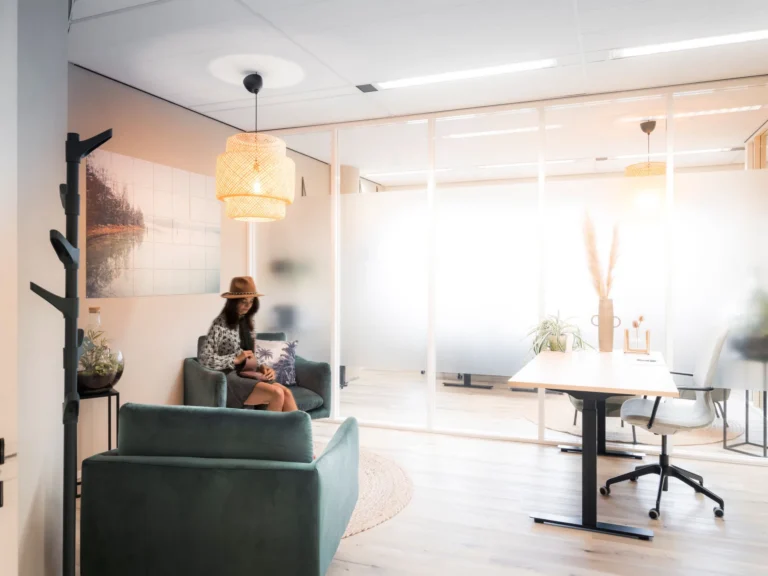
In a business centre you share part of the building with other companies: a lounge, pantry, meeting rooms. That saves metres of your own, because you do not have to rent your own meeting room or kitchen. Do look at what those spaces look like and how busy they are. Is a meeting room always free when you need one? Where do you have lunch? What else a business centre takes care of is explained in “What is a business centre and what does it take care of for you?”
6. Access and opening hours
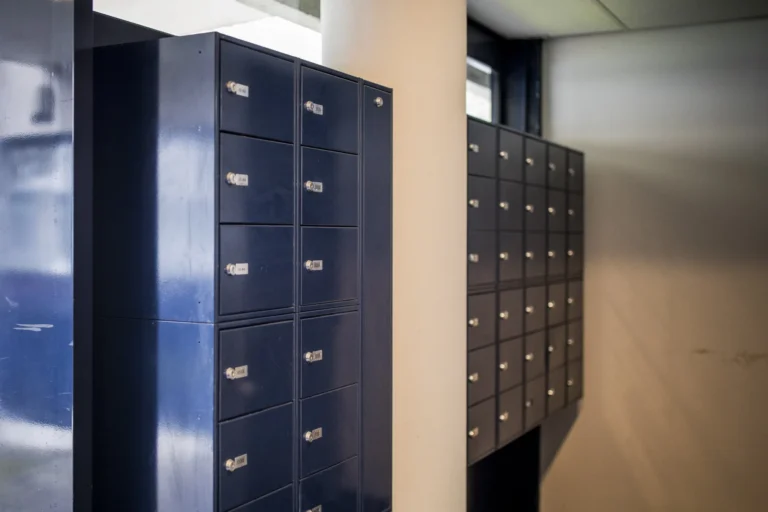
When can you get into the building? If you sometimes work in the evening or at the weekend, you want to be able to get in at any time. Also ask about reception opening hours: when are your guests welcomed and your post taken in? Those are two different things, so ask about both.
7. Room to grow
A team does not grow neatly by the year. Ask whether there are offices next to yours, and whether you can move to a larger space in the same building without a new contract lasting years. The same applies the other way round: what if you need less space?
8. The atmosphere: go and take a look
Photos do not tell you everything. Walk through the building once. How are you welcomed? Is it light, quiet, clean? Who else is there? An office you enjoy going to makes more difference than a few euros a month.
Checklist for the viewing
- How do I get there by public transport and car, and where do visitors park?
- How many workstations fit, and how were the metres counted?
- What is the term and the notice period?
- What does the monthly price include, and what do I pay separately?
- Which spaces do I share, and how do I book a meeting room?
- When can I get into the building, and when is reception open?
- Can I expand or go smaller later?
- Is there furniture, or do I bring my own?
Undecided between an office and another type of space? Then also read “Commercial space or office space: what is the difference?”
Renting office space at Element Offices
At Element Offices you rent your own office in a business centre, from a single workstation to a whole floor. You can rent from one month, and most offices for a year or less. As an office tenant you can get in day and night, weekends included. What the monthly price includes for an office is shown with the office or explained during the viewing. See what is available on Office space or choose one of our locations and book a viewing.
Frequently asked questions
How long does an office lease run?
That varies a lot. With a traditional lease you often sign for several years. In a business centre it can be shorter: at Element Offices you can rent from one month, and most offices for a year or less.
Can I come and take a look first?
Yes, and we recommend it. Book a viewing at the location you are interested in. You will see the office, the shared spaces and what an ordinary working day is like there.
What does renting an office cost?
That depends on the location, the size and what the price includes. So do not just compare the amount, but also what you get for it: service charges, cleaning, internet and shared spaces may be included or come on top.